The Complete Guide to Buying a New Launch Condo in Singapore (2026)
The full journey of buying a Singapore new launch condo in one place: budget and eligibility, financing, shortlisting, the showflat, booking day, progressive payments, TOP and CSC, and what comes after. Each stage is summarised with links to our detailed guides.
Buying a condo in Singapore as a new launch is a multi-year project, not a single transaction. You commit on booking day, pay in stages while the building goes up, and only get the keys years later. Most mistakes happen because buyers learn each stage only when they reach it.
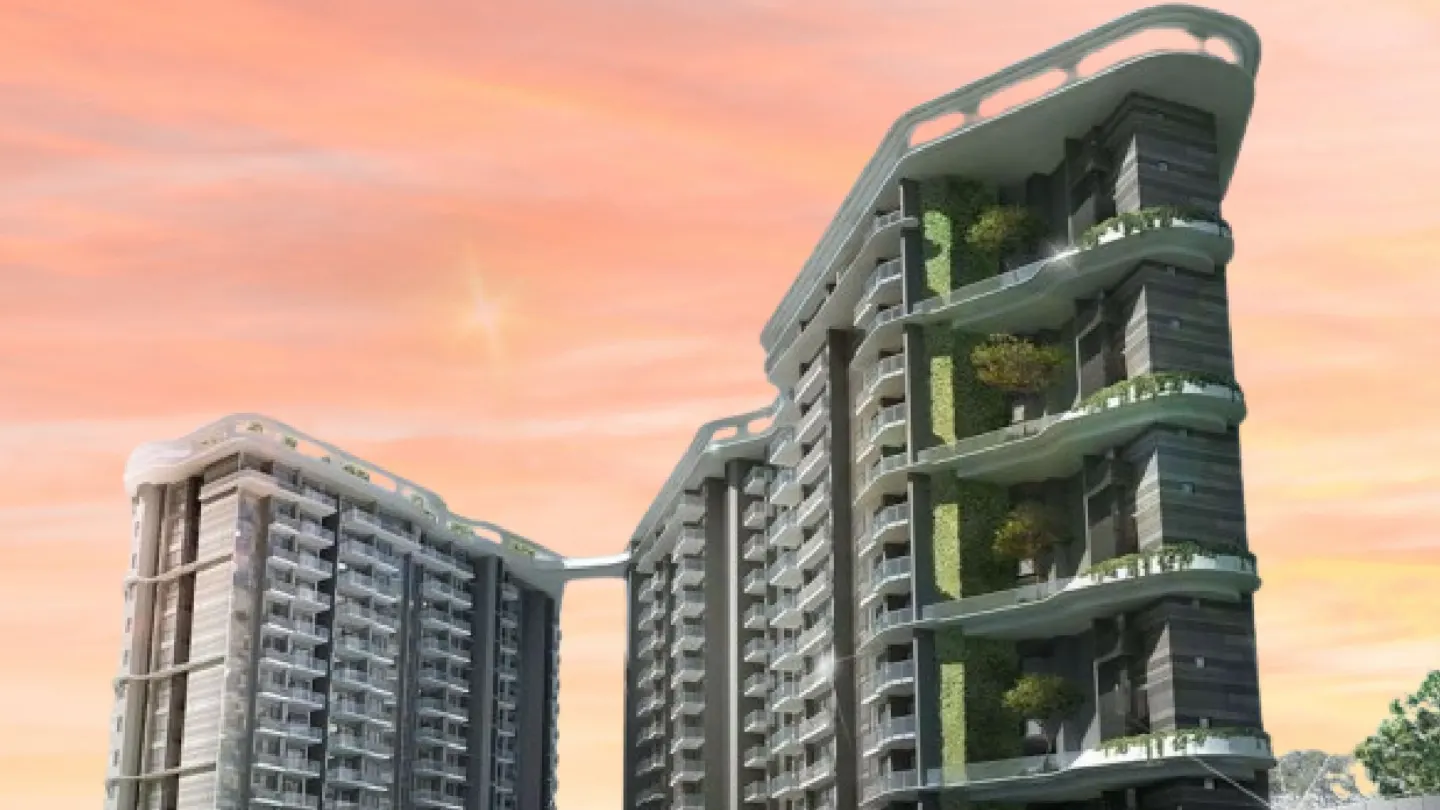
This guide lays out the whole journey on one page. Each stage gets a short summary and links to our detailed guides, so you can see what is coming and read deeper when you need to. We use LinkTown Residences (Hougang Central Residences), the private condo planned at the Hougang Central integrated development in District 19, as a running example. The process itself applies to almost any Singapore new launch.
Buying a condo in Singapore: the journey at a glance
| Stage | What you do | Key money or paperwork | Deep-dive guide (linked below) |
|---|---|---|---|
| 1. Budget & eligibility | Check your buyer profile, ABSD, TDSR and cash/CPF position | ABSD rate, TDSR 55%, LTV 75% (first loan) | Stamp duty |
| 2. Financing | Compare banks, get an In-Principle Approval | IPA letter, loan quantum | Home loans |
| 3. Research & shortlisting | Compare projects, locations, layouts and stacks | Indicative prices, floor plans | New launch vs resale |
| 4. Showflat | Visit, ask questions, collect the price list | Brochure, price list, charts | Showflat checklist |
| 5. Booking day | Submit EOI, choose a unit, pay 5% | EOI cheque, 5% booking fee, OTP | Booking day |
| 6. S&P and payments | Sign S&P, pay stamp duty, pay by stage | BSD/ABSD within 14 days; 15% within ~8 weeks | Progressive payment |
| 7. TOP & CSC | Collect keys, inspect defects, final payments | 25% at TOP, 15% at CSC | TOP, CSC & handover |
| 8. Own, rent or sell | Live in, lease out, or sell later | Maintenance fees, property tax, SSD | SSD & sub-sale |
Stage 1: Budget and eligibility
Start with who is buying, because your buyer profile sets your stamp duty and your loan limits. Singapore Citizens pay no Additional Buyer’s Stamp Duty (ABSD) on a first home; permanent residents and foreigners pay ABSD from the first property, and joint purchases are charged at the rate of the buyer with the highest ABSD. Everyone pays Buyer’s Stamp Duty (BSD). Our BSD and ABSD guide sets out the tiers, and the stamp duty calculator does the arithmetic.
Your profile also changes the rules you need to know. There are dedicated guides for HDB upgraders (including timing your flat sale around the ABSD refund window), singles, permanent residents and foreign buyers. If you are buying with someone else, decide early between joint tenancy and tenancy in common; see co-ownership explained.
Then set a price ceiling you can afford that includes stamp duty, legal fees and a cash buffer, not just the purchase price. Our cost of owning a condo guide lists the one-off and recurring costs people often forget.
Stage 2: Financing
Private property is financed by bank loans only; HDB loans do not apply. For a first housing loan with a tenure of up to 30 years, the loan-to-value limit is 75%, so you need a 25% down payment, of which at least 5% must be cash. The Total Debt Servicing Ratio caps all your monthly debt repayments at 55% of income, assessed at a stress-test rate of 4% for private property. The Mortgage Servicing Ratio does not apply to private condos.
Get an In-Principle Approval (IPA) from a bank before the showflat opens. It tells you what you can actually borrow and is useful on booking day. Our home loan guide covers floating versus fixed packages, lock-ins and refinancing.
CPF Ordinary Account savings can cover part of the down payment beyond the 5% cash, reimburse BSD and pay monthly instalments, within the Valuation Limit and Withdrawal Limit. Read using CPF for a private condo before assuming how much CPF you can deploy. And remember the bank lends on the lower of the price or its valuation; any gap is paid in cash, which our bank valuation guide explains.
Stage 3: Research and shortlisting
This is where most of your time should go, and where it pays off most. Work from the big picture down.
New launch or resale?
New launches offer staged payments, new facilities and a longer remaining lease, but you wait years for keys and cannot inspect the actual unit. Resale gives you certainty today. Our new launch vs resale comparison walks through the trade-offs, especially for upgraders.
Location and market segment
Understand where a project sits. Hougang is in the Outside Central Region; our OCR, RCR and CCR explainer covers what the segments mean for pricing. Tenure matters too: most GLS sites, including this one, are 99-year leasehold. See leasehold vs freehold.
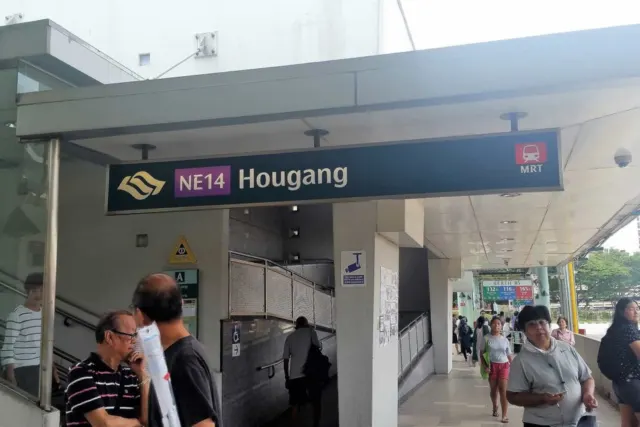
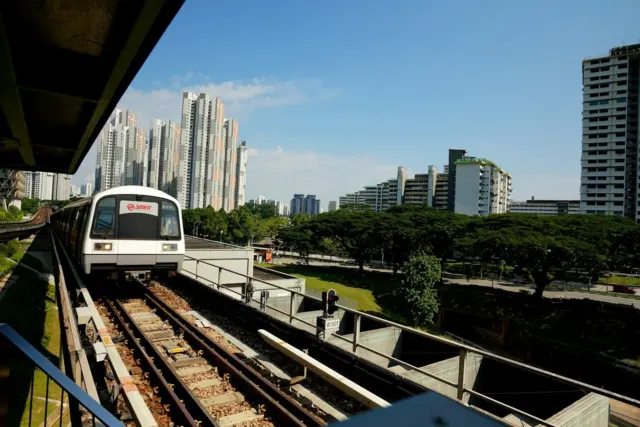
For LinkTown Residences specifically, start with the project overview and the location page. The site is directly linked to Hougang MRT (NE14) on the North-East Line, which is set to become an interchange with the Cross Island Line around 2030. If you are weighing the wider area, Hougang vs Sengkang vs Punggol and living in Hougang give the local picture, and families can check schools near the site.
Project type and comparables
LinkTown Residences is a private condo on a mixed-use site with a mall and bus interchange, not an executive condo (why it is not an EC). Read what an integrated development is and browse the list of integrated condos for context. Then compare with specific projects: vs Parktown Residence and vs nearby Hougang condos.
Price and layout
No official prices have been released. Analysts expect an average of around S$2,500–2,600 psf; our price estimate turns that into illustrative quantums by unit type. Pair it with the indicative floor plans and learn how to read a floor plan so you compare usable space, not just strata area. Finally, think about which part of the site you want to live in; the stack selection guide covers facing, noise and views at an integrated site.
For a balanced view of the whole project, including its drawbacks, read our review: is it worth buying?
Stage 4: The showflat
The showflat is where estimates meet real information: the developer’s brochure, actual floor plans, the site plan, and eventually the price list. Treat it as a fact-finding visit, not a buying event. Our showflat checklist lists what to measure, photograph and ask.
A few things to confirm on the visit: which fittings are in the showflat but not in the actual unit, where columns and AC ledges sit, and what is counted in the strata area. Collect the price list and learn to read it alongside the balance and elevation charts. Ask whether a Deferred Payment Scheme is offered, and if it is, how its pricing compares with the normal progressive scheme.
For LinkTown Residences, the showflat location and dates are not yet announced; the showflat page will be updated when they are.
Stage 5: Booking day
For popular launches, you submit an Expression of Interest (EOI), usually with a cheque or cashier’s order for an amount set by the developer. A ballot may decide the order in which buyers choose. When your number is called, you pick from the units still available and pay a 5% booking fee to receive the Option to Purchase (OTP).
The key is preparation: a ranked shortlist spread across stacks, a firm price ceiling including stamp duty, and all buyers’ documents ready. The booking day guide covers the EOI, ballot and what to bring in detail.
Stage 6: S&P, stamp duty and progressive payments
After the OTP, the developer issues the Sale and Purchase Agreement, which you generally have about three weeks to sign. Stamp duty is due within 14 days of exercising the option, so have BSD and any ABSD ready in cash; CPF can reimburse BSD where eligible. On an illustrative S$1.7 million unit, BSD is S$54,600.
Under the normal progressive payment scheme, the next 15% is due about eight weeks after the OTP, then instalments follow construction milestones: 10% at foundation, 10% at reinforced concrete frame, 5% each for walls, roof, doors/windows/wiring/plumbing and car park/roads/drains, 25% at TOP and 15% at CSC. The bank disburses your loan progressively, and you pay interest only on what has been drawn. Our progressive payment guide shows the full schedule, and the payment calculator maps it to a price.
If you are selling an HDB flat or another property during this period, the timing matters for cash flow and any ABSD refund. The upgrader guide covers this sequence.
Stage 7: TOP, key collection and CSC
The Temporary Occupation Permit (TOP) allows owners to move in. You receive a notice of vacant possession, pay the 25% TOP instalment, collect your keys and inspect for defects. The defects liability period is usually 12 months from vacant possession, so document issues early and submit them through the developer’s process. The Certificate of Statutory Completion (CSC) follows once all statutory requirements are met, with the final 15% due then.
Our TOP, CSC and handover guide covers the inspection checklist and what to expect from the handover. For LinkTown Residences, completion is expected around 2030/2031; an exact TOP date has not been announced.
Stage 8: Owning, renting or selling
Living in it
From handover you pay maintenance fees to the MCST, set by share value and split between the management fund and sinking fund. See maintenance fees explained. Property tax is based on the Annual Value, with lower rates for owner-occupiers. Our cost of owning guide puts these into a monthly budget.
Renting it out
Private homes can be rented for a minimum of three consecutive months, subject to URA occupancy caps, and rental income is taxable. The rental potential guide looks at likely tenant demand around Hougang Central, and the for investors page sets out the investment case and risks.
Selling
Seller’s Stamp Duty (SSD) applies if you sell within the holding period. For residential property bought on or after 4 July 2025, the holding period is four years as announced (verify with IRAS), and it counts from the purchase date, so a sub-sale before completion can attract SSD. See SSD and sub-sale. On sale, any CPF you used plus accrued interest goes back to your CPF account.
Common mistakes across the journey
- Budgeting on the price alone. Stamp duty, legal fees and a buffer for valuation shortfalls all need cash.
- Skipping the IPA. Loan limits change with age, income and existing debts; know yours before booking day.
- Falling for the showflat. Judge the floor plan, not the styling.
- One-stack shortlists. If that stack sells out early, you are left choosing on impulse.
- Forgetting the long timeline. Plan cash flow for several years of staged payments, and consider how life may change before TOP.
If a term along the way is unfamiliar, our Singapore property glossary explains the jargon from ABSD to vacant possession.
How to buy a condo in Singapore: where to start
If LinkTown Residences is on your list, the useful next steps today are to understand your budget and loan limits, read the project pages, and follow the FAQ for updates as details are released. The Hougang Central condo is expected to launch in early 2027, which gives time to prepare properly.
To receive the floor plans, price list and preview details as soon as they are announced, register your interest.
This guide summarises general Singapore rules as published, including stamp duty, loan limits, CPF usage and SSD. Rules change; verify with IRAS, MAS, CPF Board, HDB, URA and your bank or lawyer. Details for LinkTown Residences, including prices, unit mix, TOP date and showflat, have not been announced. Illustrative figures are estimates, not official prices. This is general information, not financial or legal advice.
Project-specific questions are answered in the LinkTown Residences FAQ, and the brochure page has the project overview in one place.