LinkTown Residences Rental Potential: Tenant Demand, Yield Maths and Risks
Who is likely to rent at LinkTown Residences (Hougang Central Residences), which unit types tend to let best, how to work out yield with clearly hypothetical rents, and the risks investors should weigh.
Many buyers looking at LinkTown Residences (Hougang Central Residences) are asking the same question: will it rent well? An integrated development linked to Hougang MRT, with a new mall and bus interchange downstairs, has obvious appeal to tenants. But as with any rental yield in Singapore, returns depend on the price you pay, the unit you choose and the market when the project completes around 2030 to 2031.
This guide looks at who is likely to drive Hougang rental demand, what tends to let best, how to do the yield maths, and the risks. It does not predict rents. The project has no official prices and no rental history, so every rent figure below is a hypothetical assumption for illustration only.
Who are the likely tenants?
Rental demand comes from people who need to live near where they work or study, and who value convenience. Hougang Central sits close to several such groups.
- PDDPunggol Digital District and SITThe roughly 50-hectare district brings JTC business parks for the digital economy and a new Singapore Institute of Technology campus. It is a few stops up the North-East Line, so staff and faculty may look to Hougang for rental options with more established amenities.
- SKHSengkang General HospitalThe hospital is a short NEL ride away. Healthcare workers, including those on shift rosters, often prefer homes with quick, direct transport links.
- CRLEastern and central employmentOnce CRL Phase 1 opens around 2030, Hougang connects directly towards Tampines North, Pasir Ris and Aviation Park near Changi. The NEL already runs to the city, and Serangoon, two stops away, links to the Circle Line towards Paya Lebar.
- FAMFamilies in transitionHouseholds waiting for a new home, selling and buying, or who want to be near schools such as Montfort Junior School, Holy Innocents’ Primary and CHIJ Our Lady of the Nativity.
There is also the local catchment itself. Hougang has around 230,000 residents, so there is a steady stream of grown children and relocating relatives who want to stay close to family in the area. For more on the business district, see our Punggol Digital District guide and our note on the SIT Punggol campus and Punggol Coast MRT.
Why integration helps rentals
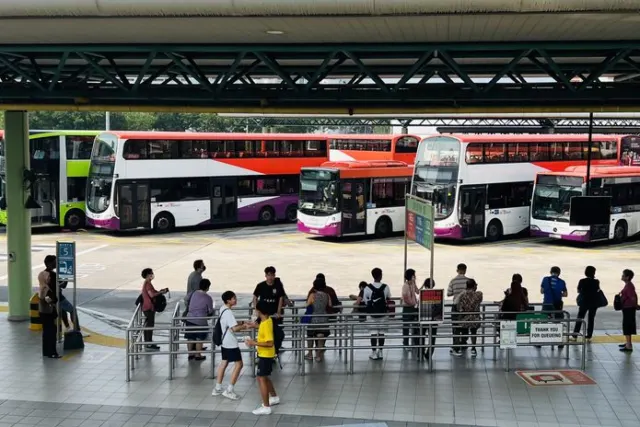
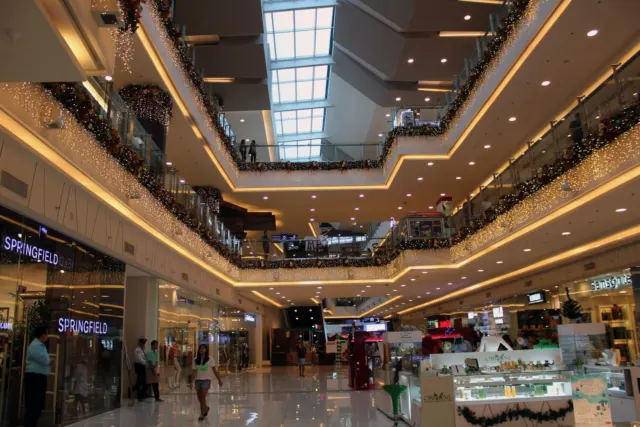
Tenants usually care less about a condo’s facilities list and more about their daily routine. A short walk to the MRT, groceries and food in the mall downstairs, and a bus interchange for connections cover most of what a tenant checks on a viewing. Hougang also has far less private retail space per resident than the national average (about 2.8 sq ft per person against 11.4 sq ft), so a new mall of around 300,000 sq ft will be a real draw.
These strengths make a unit easier to let and may help it re-let faster between tenancies. They do not guarantee a higher yield, because the purchase price will reflect the same advantages.
Which unit types typically rent best?
These are general patterns from the Singapore rental market, not forecasts for this project. We use the indicative sizes from Parktown Residence, the developers’ recent project, because official floor plans are not out yet.
| Unit (indicative) | Typical tenant | General rental traits |
|---|---|---|
| 1-Bedroom + Study (506 sq ft) | Single professional, couple | Lowest quantum; the study helps with hybrid work; wide tenant pool |
| 2-Bedroom Premium (678 sq ft) | Couples, flatmates, small families | Flexible; can be shared by two working adults |
| 3-Bedroom Premium (1,066 sq ft) | Families, groups of professionals | Longer tenancies; higher rent but higher entry price |
| 4- and 5-Bedroom (1,496–1,679 sq ft) | Larger families | Smaller tenant pool; usually bought to live in |
In general, smaller units tend to show a better gross yield because rent does not rise in line with size. Larger units may attract more stable, longer-term tenants. Which matters more depends on your goals. Browse the indicative layouts on our floor plans page.
How to work out rental yield in Singapore
Gross yield is annual rent divided by purchase price. Net yield subtracts running costs such as maintenance fees, property tax, agent fees, insurance, repairs and vacant months. Here is the method using illustrative prices at the analyst-expected S$2,500 psf and hypothetical rents that we have made up purely to show the maths:
| Unit (indicative) | Illustrative price | Assumed monthly rent (hypothetical) | Gross yield |
|---|---|---|---|
| 1-Bedroom + Study | ~S$1.27m | S$3,300 | ~3.1% |
| 2-Bedroom Premium | ~S$1.70m | S$4,000 | ~2.8% |
| 3-Bedroom Premium | ~S$2.67m | S$5,500 | ~2.5% |
These rents are assumptions, not market data or projections for LinkTown Residences. Prices are illustrative, based on an analyst-expected average psf and indicative sizes. Actual prices, rents and yields will differ.
Now take the 2-Bedroom example to net. If you assume S$8,000 a year of combined running costs (again, an assumption), net rent is S$40,000 and net yield is about 2.4%. Then compare that with your loan interest. On a 75% loan of about S$1.275m, even a modest interest rate can absorb most of the rent in the early years. That is normal for Singapore private property. Many investors accept low cash returns in exchange for long-term capital growth, but you should go in knowing that.
Try your own numbers below, or use the full rental yield calculator.
Rental yield calculator
Estimates for illustration only, based on published IRAS/MAS rules. Rates change; confirm with IRAS, your bank and your lawyer.
Risks to weigh
Supply at completion
About 830 homes will be completed at roughly the same time. If a large share of buyers are investors, many units could hit the rental market together around TOP, which can hold rents down for the first year or so. Other private completions in the north-east at the same time would add to that competition.
The long wait
You commit your money in 2027 but may not collect rent until around 2030 or 2031. During construction you pay progressive instalments with no income. The rental market in four years’ time could be stronger or weaker than today.
Entry price
If LinkTown Residences launches at S$2,500 to S$2,600 psf, it will be well above Hougang resale condos. Tenants compare rents, not psf, so part of the premium you pay may not show up in the rent. See our comparison with nearby Hougang condos.
Timing risks outside your control
The CRL is targeted for around 2030 and completion for 2030/2031. Delays to either can affect when the location’s full appeal kicks in.
Costs and rules
Maintenance fees have not been announced. Property tax on non-owner-occupied homes is higher than on owner-occupied ones, and ABSD applies if this is not your first property. Check the current rates with IRAS before you commit.
A practical checklist for investors
- Decide your budget for quantum, not psf. Smaller units are easier to finance and to let.
- Look for stacks away from the bus interchange and busy plaza if you want broader tenant appeal.
- Stress-test your loan at a higher rate and a few months’ vacancy a year.
- Check actual rents at nearby condos, including Sengkang Grand Residences, closer to completion.
- Account for ABSD and stamp duty using our stamp duty guide.
Bottom line
LinkTown Residences has the ingredients that tenants value: direct MRT access, a future CRL interchange, a large mall and nearby employment at Punggol Digital District and Sengkang General Hospital. What it will not offer is a cheap entry price, so yields will depend heavily on the unit you pick and what you pay. Run conservative numbers and treat any rental income as a bonus on a long-term hold.
Want the official price list to run real numbers? Register your interest and we will send it when it is released.
For the full investor view, including holding costs and exit rules, see LinkTown Residences for investors.